TRUSTED BY ORGANISATIONS WORLDWIDE
Every score rests on accredited science, not opinion or gut feel.
It shows what people are naturally good at and get energy from, not just how they behave.
Every insight comes with practical advice a manager can use straight away.
Pick any part of the report below and see what it shows, and how to read it.
A short summary of the whole person, followed by the five themes that run through the profile. Each theme shows how talents combine, reinforce each other or pull in opposite directions.
Single talents rarely explain behaviour on their own. The themes show the patterns you will actually notice day to day, and each ends with concrete advice on how to work with it.
“The candidate is a relationship-led strategist who combines genuine warmth with real ambition. She builds trust quickly, reads the history behind any situation before she acts, and then moves with the confidence of someone who already knows where she is going (Connecting 1, Contextual 2, Confident 5 and Targeted 6).”
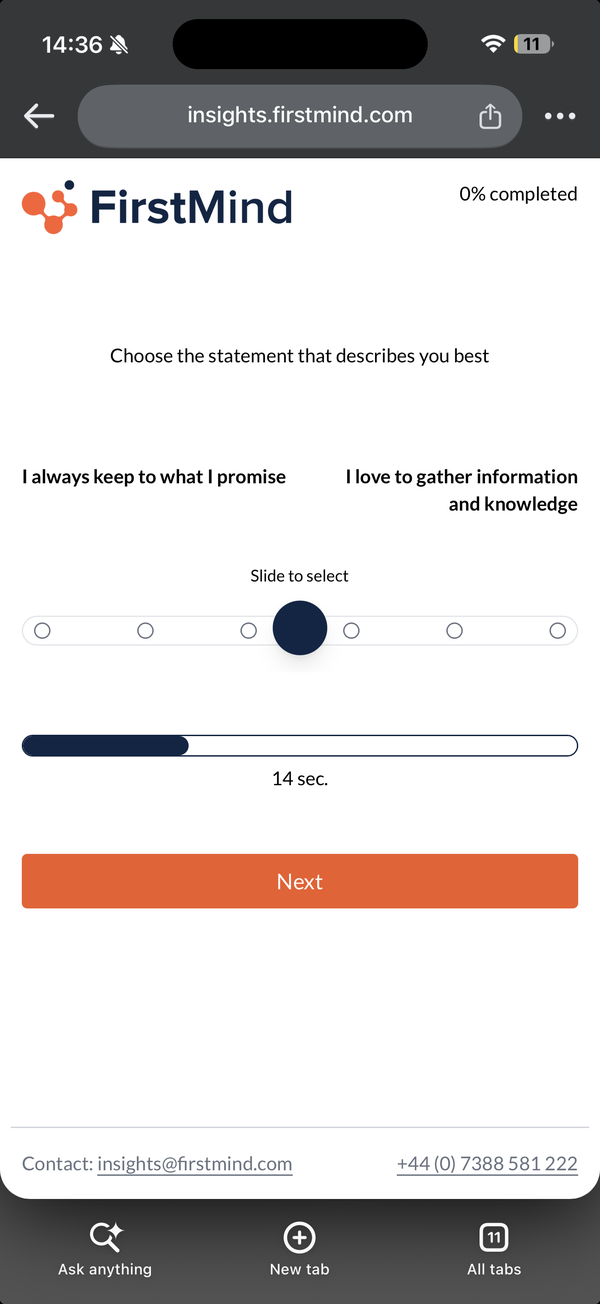
Simple questions, no right or wrong answers, and feedback on their own profile.
Sign up, take the test and get your own profile.
You talk to Marie or Jonas. We will together discover if FirstMind can add value to you.
TRUSTED BY ORGANISATIONS WORLDWIDE

Every score rests on accredited science, not opinion or gut feel.
It shows what people are naturally good at and get energy from, not just how they behave.
Every insight comes with practical advice a manager can use straight away.
Pick any part of the report below and see what it shows, and how to read it.
A short summary of the whole person, followed by the five themes that run through the profile. Each theme shows how talents combine, reinforce each other or pull in opposite directions.
Single talents rarely explain behaviour on their own. The themes show the patterns you will actually notice day to day, and each ends with concrete advice on how to work with it.
“The candidate is a relationship-led strategist who combines genuine warmth with real ambition. She builds trust quickly, reads the history behind any situation before she acts, and then moves with the confidence of someone who already knows where she is going (Connecting 1, Contextual 2, Confident 5 and Targeted 6).”
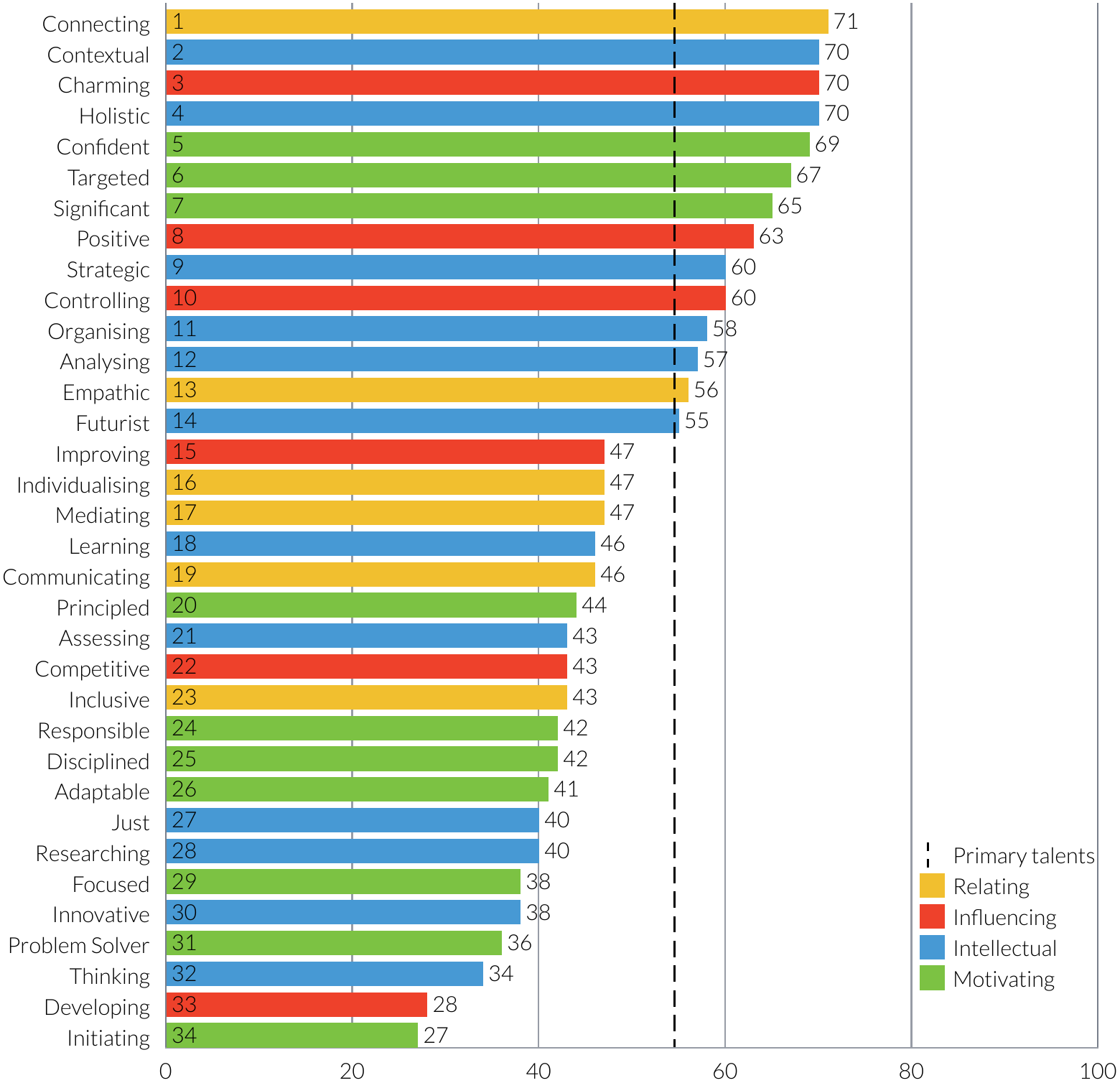
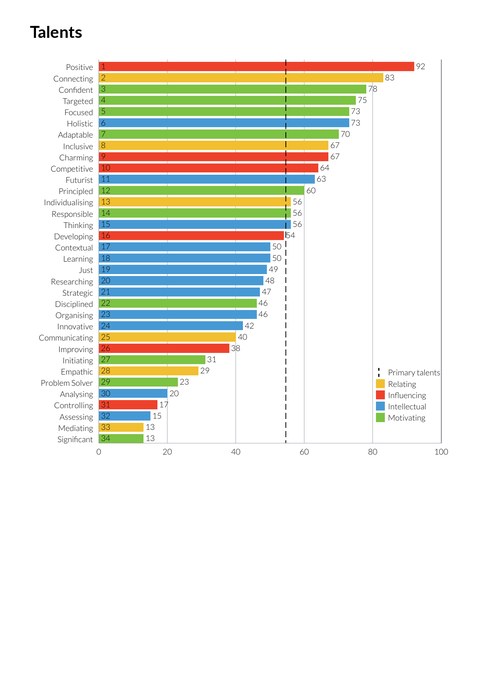
All 34 talents ranked from strongest to weakest. The colour shows the domain (relating, influencing, intellectual or motivating) and the dashed line marks where the primary talents stop.
The talents above the line are where the person learns fastest and gets energy. Those far below are where work will feel draining, however skilled they are.
“The top talents determine two things: what the person can learn quickly and become great at, and which tasks they enjoy and get energy from. In the example, Connecting, Contextual, Charming and Holistic all sit around 70, well above the primary-talent line.”

The top 12 talents in depth. Each one is explained as a strength, the challenge it brings and an insight on how to use it.
The same talent that makes someone great can also trip them up. Seeing both sides helps you place people well and plan where they need support.
“She builds real relationships fast, and those relationships become the infrastructure through which she gets things done. In a client-facing or cross-functional role, she will have genuine allies in places others have only acquaintances. (Connecting, ranked 1)”
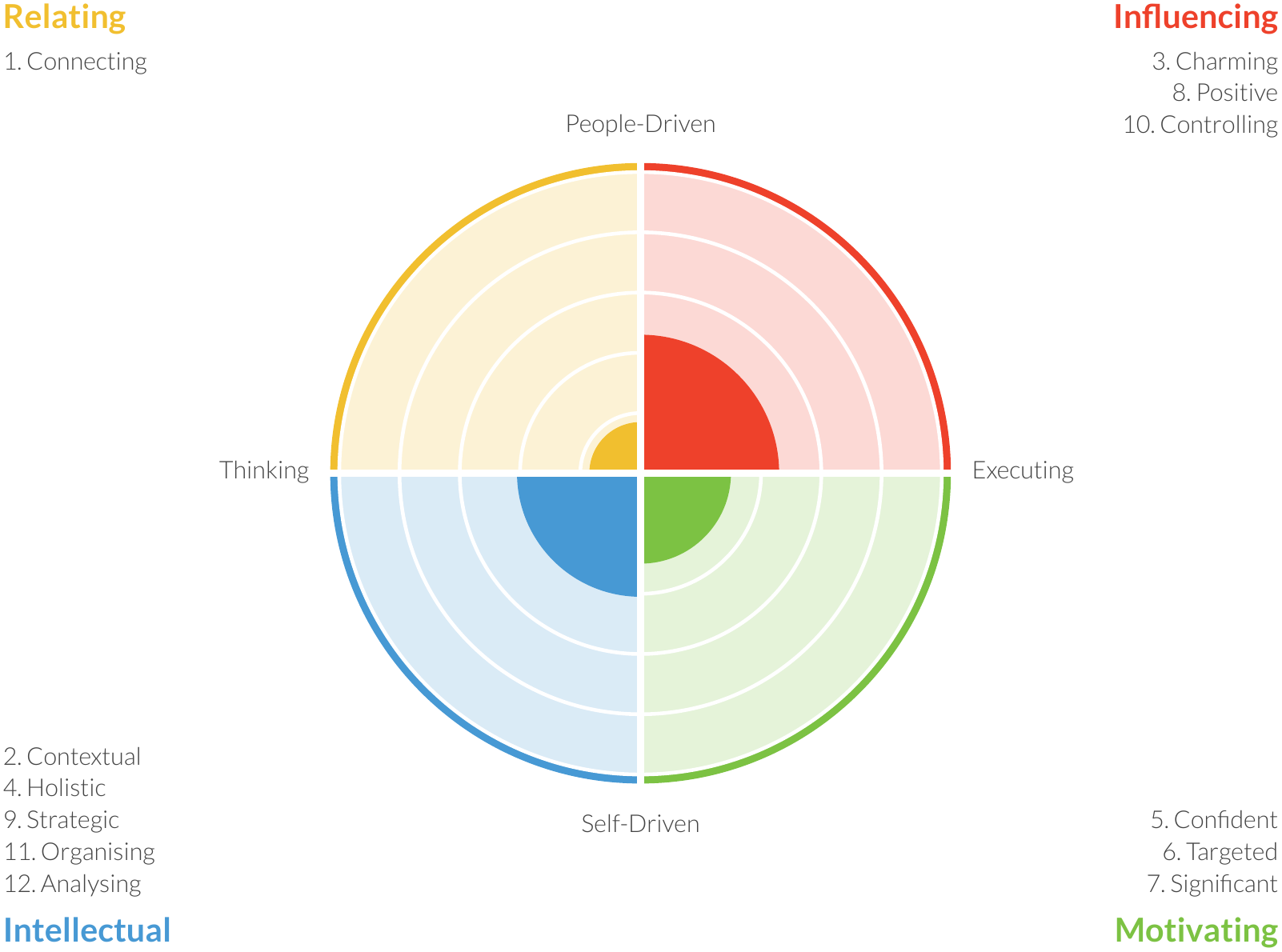
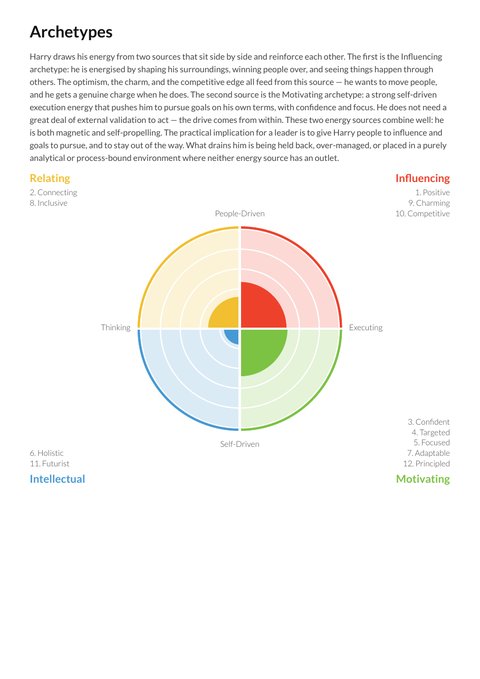
The top 12 talents placed on a wheel with two axes: thinking versus executing, and people-driven versus self-driven. Where they cluster shows the person’s main archetype.
It explains where someone gets their energy. A thinker forced into pure execution, or a people person working alone, will burn out faster.
“The candidate draws her energy from two distinct sources that reinforce each other well. Her Influencing energy comes from seeing things happen through people — she is energised by shaping a room, winning someone over, and watching a direction take hold because she pushed it. Her Thinking energy comes from processing information and context before she acts — she needs to understand the history and the system before she commits.”

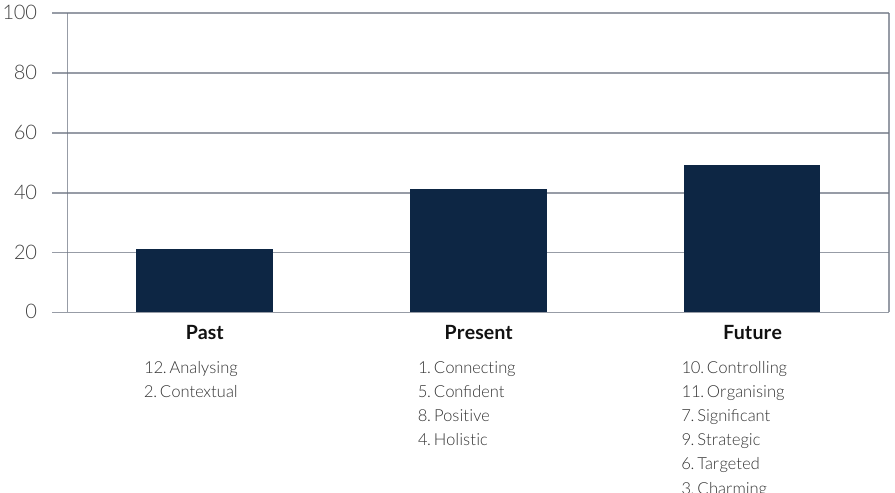
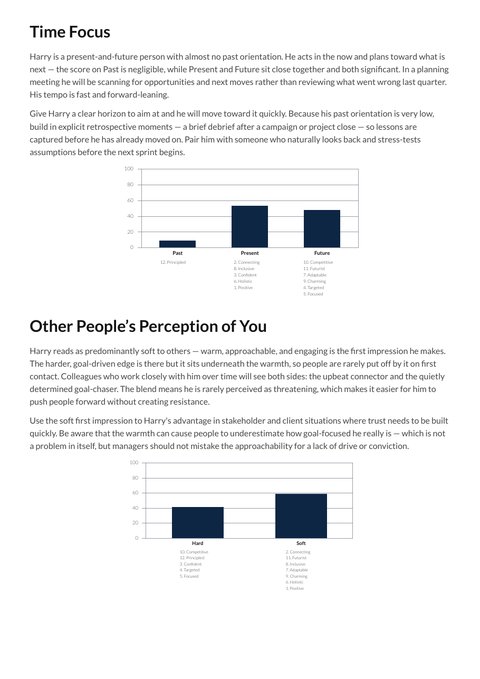
How the top talents split across past, present and future. Each bar shows how many talents point that way.
It tells you the person’s natural pace: learning from experience, delivering today or chasing what comes next. Mismatched pace is a common source of friction in teams.
“The candidate leans forward in time more than she looks back. Her dominant orientation is toward what comes next — the next goal, the next position, the next outcome — which gives her a naturally fast working pace and a bias toward action over reflection. The past is not ignored; she uses it selectively to validate a direction rather than to slow herself down.”

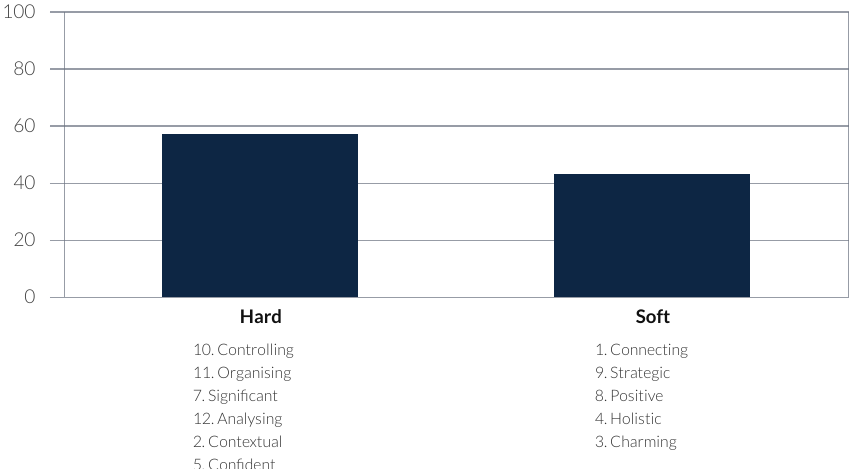
Whether the top talents come across as hard (driven, direct) or soft (warm, accommodating) in a first impression.
People judge each other in seconds. Knowing how someone is read helps them land better with candidates, clients and new colleagues.
“Others will read the candidate as direct and goal-oriented before they read her as warm, even though the warmth is genuine. The harder talents in her profile — drive, confidence, and a clear sense of where she wants to get to — come across in first impressions before the relational side has time to register. She will not be perceived as cold, but she will be perceived as purposeful, which can read as pressure in people who are more cautious or consensus-driven.”

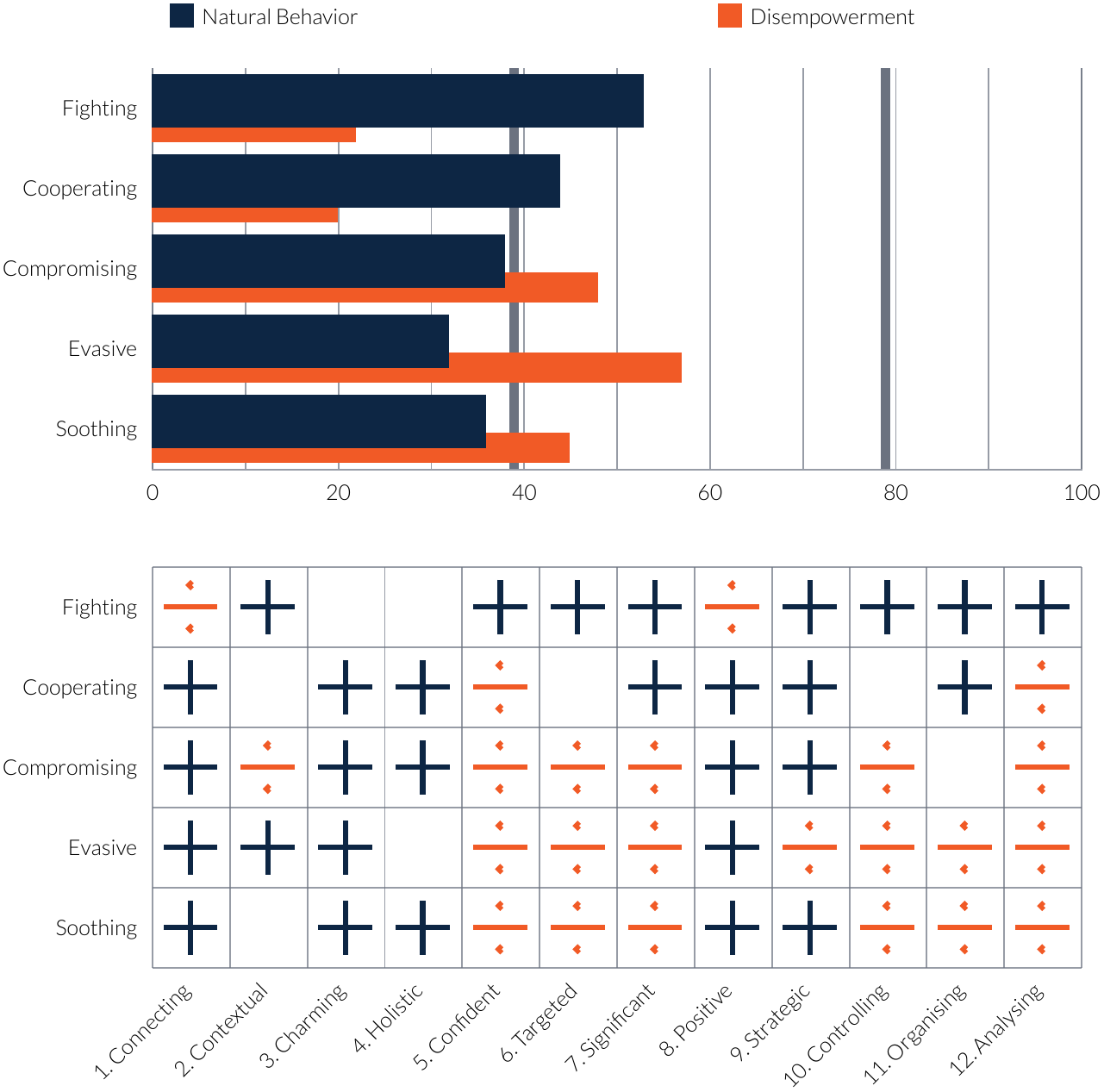
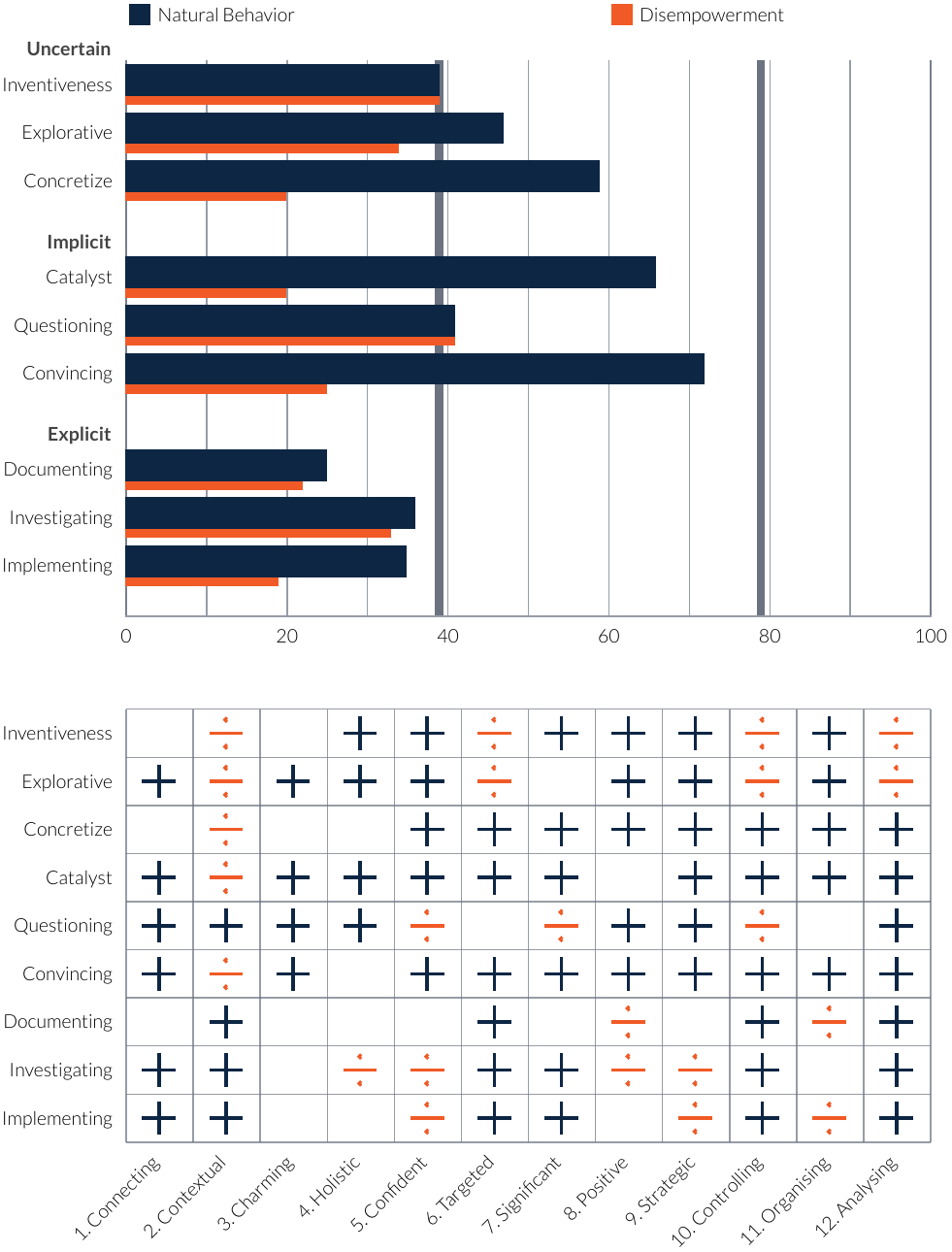
Five ways of handling discussion and conflict: fighting, cooperating, compromising, evasive and soothing. Dark bars show natural behaviour, orange bars what happens when they feel disempowered. The grid shows which talents drive each style.
Most conflicts go wrong when people shift into their disempowered pattern. Seeing both lets you prepare hard conversations and spot the shift early.
“The candidate's dominant discussion style is direct and objective-focused. She enters a conversation with a goal in mind and works toward it; small talk exists in service of the relationship, not as an end in itself. Her secondary style is cooperative — she genuinely wants the right people's views on the table before a decision lands, particularly when strategy or precedent is involved.”

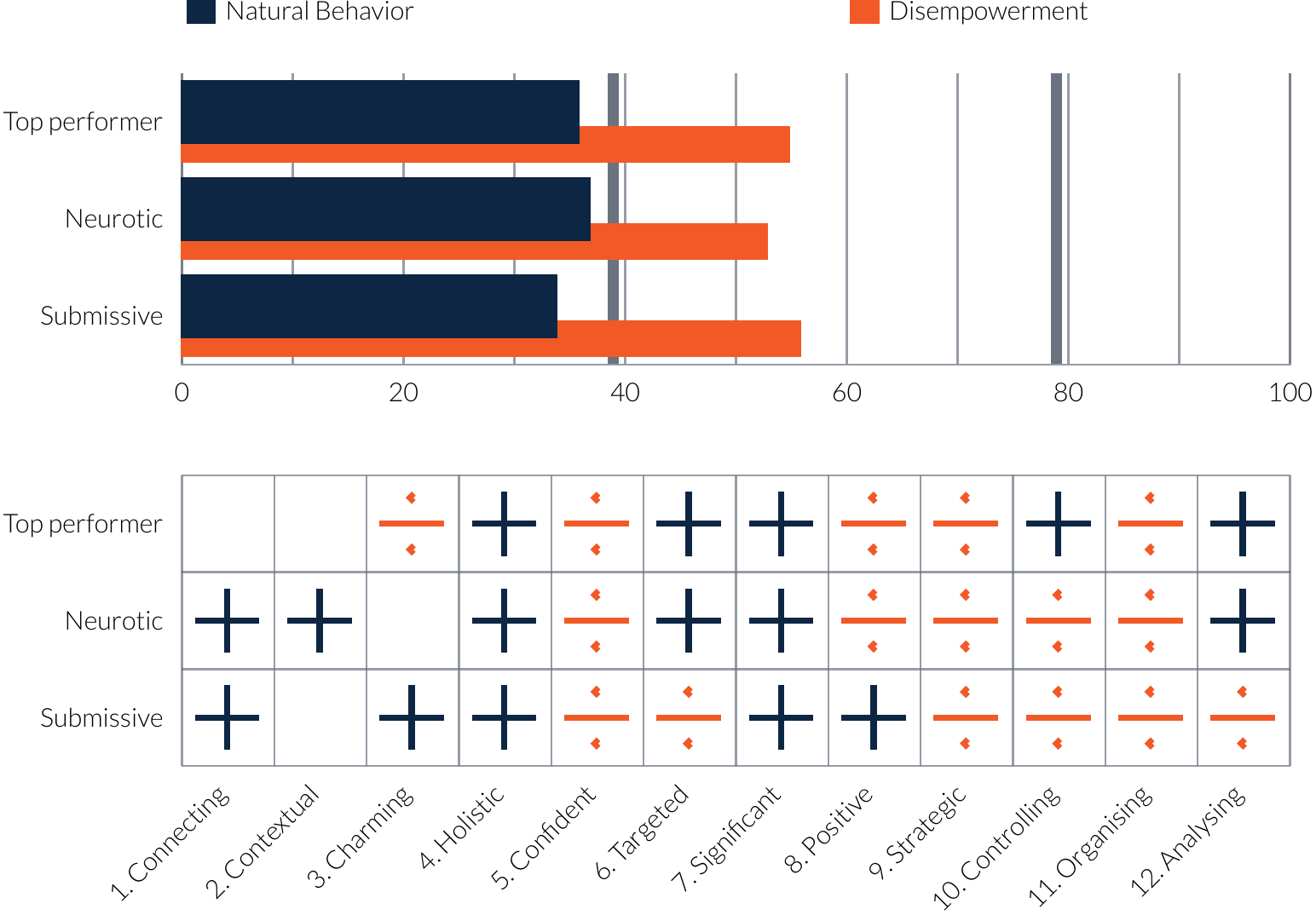
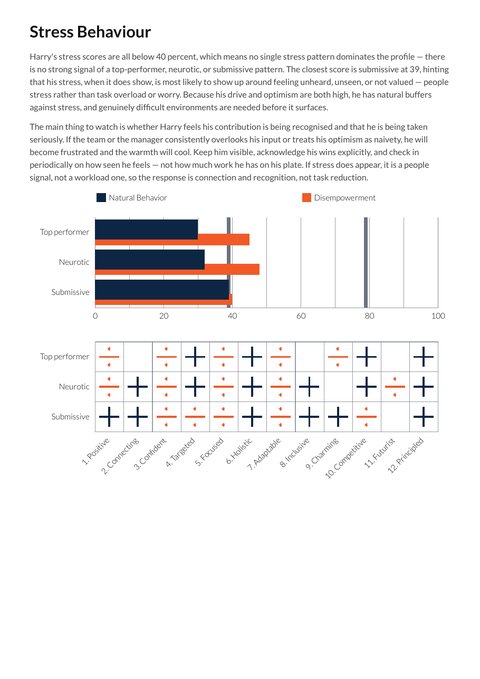
Three typical responses to pressure: rising to it as a top performer, becoming anxious (neurotic) or going quiet (submissive), both naturally and when disempowered.
Stress changes behaviour before it changes results. Knowing someone’s pattern lets you act before performance drops or people leave.
“The candidate's stress scores are all moderate and sit below the threshold where any single pattern dominates reliably. This means she is not acutely prone to any one stress response under normal conditions, which is a genuine resilience asset. When pressure does build, the most likely signal is a mild neurotic pattern — a creeping worry that things are not as well-mapped or as under-control as she would like — rather than physical burnout or emotional withdrawal.”

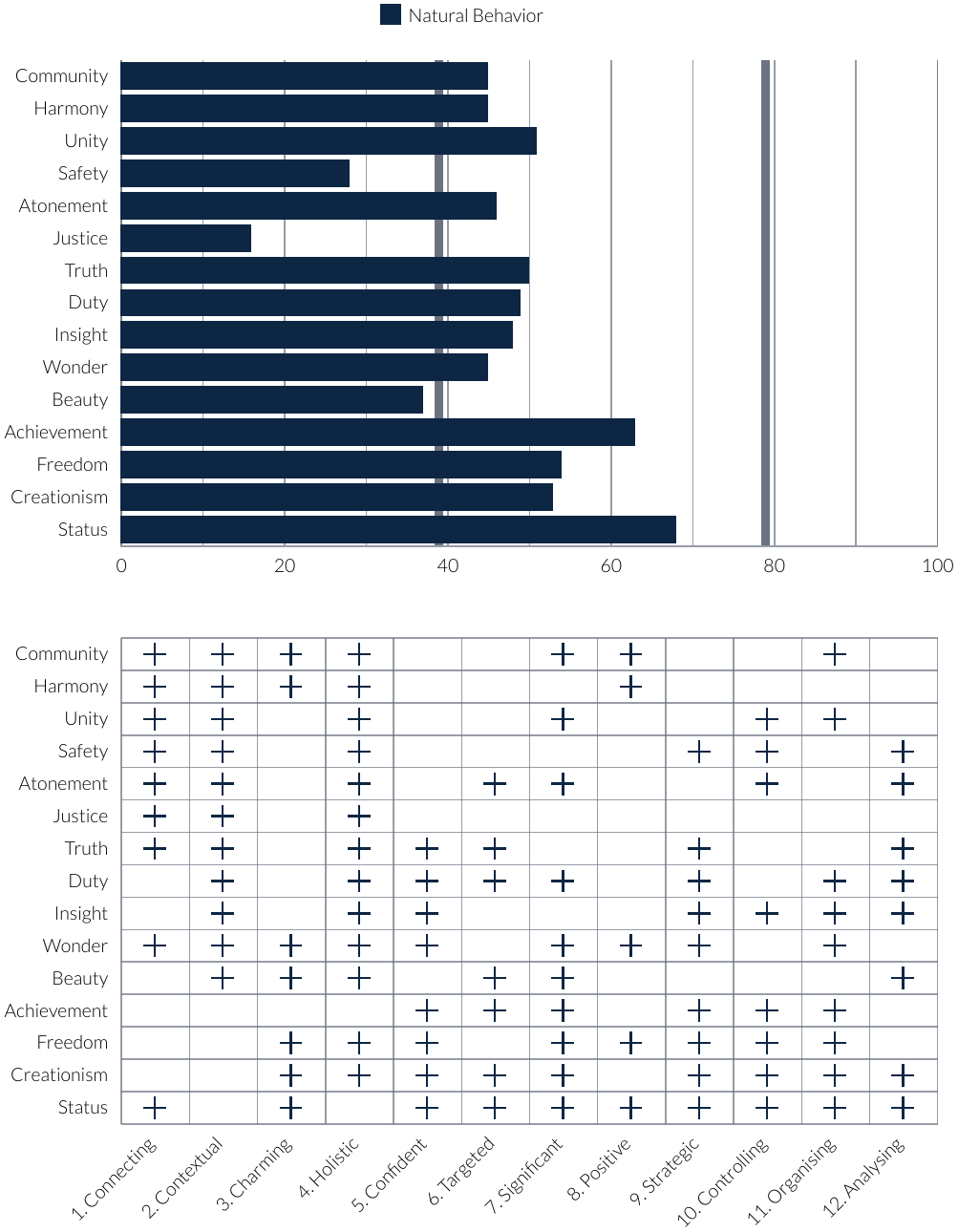
The values that motivate the person, from community, harmony and truth to achievement, freedom and status. Bars above the line drive daily behaviour.
People work hardest for what they value, not for what their manager values. Linking goals and recognition to these drivers is the cheapest way to raise engagement.
“The candidate is primarily motivated by status and achievement — she wants results that are seen, recognised, and associated with her name. These are strong, defining drivers that sit above the threshold where they shape daily behaviour, not just occasional ambition. Underneath them sits a cluster of values-adjacent drivers — truth, duty, and a sense of belonging to something larger — which means her ambition is not purely self-serving.”

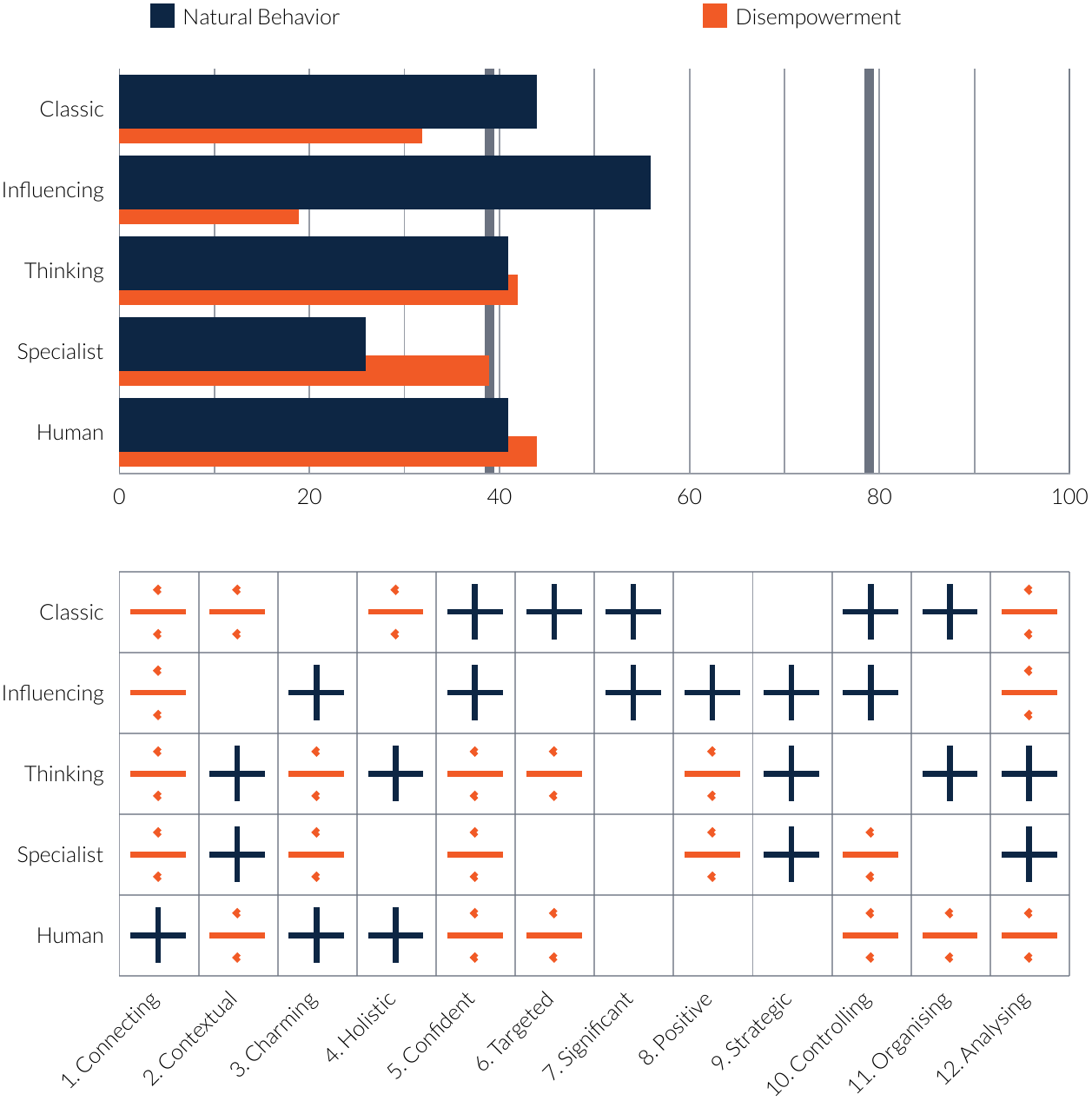
Five ways motivation shows up at work: classic (getting tasks done), influencing, thinking, specialist and human-focused.
It shows what kind of work refuels the person. When motivation drops, this is where you look for what is missing.
“The candidate is motivated primarily through influence — she is energised by moving people, shaping outcomes, and being in a position where her actions visibly change what happens around her. This is not a background preference; it is the dominant mode in her motivational profile. She needs a path upward or outward and an audience or set of stakeholders she can genuinely act on.”

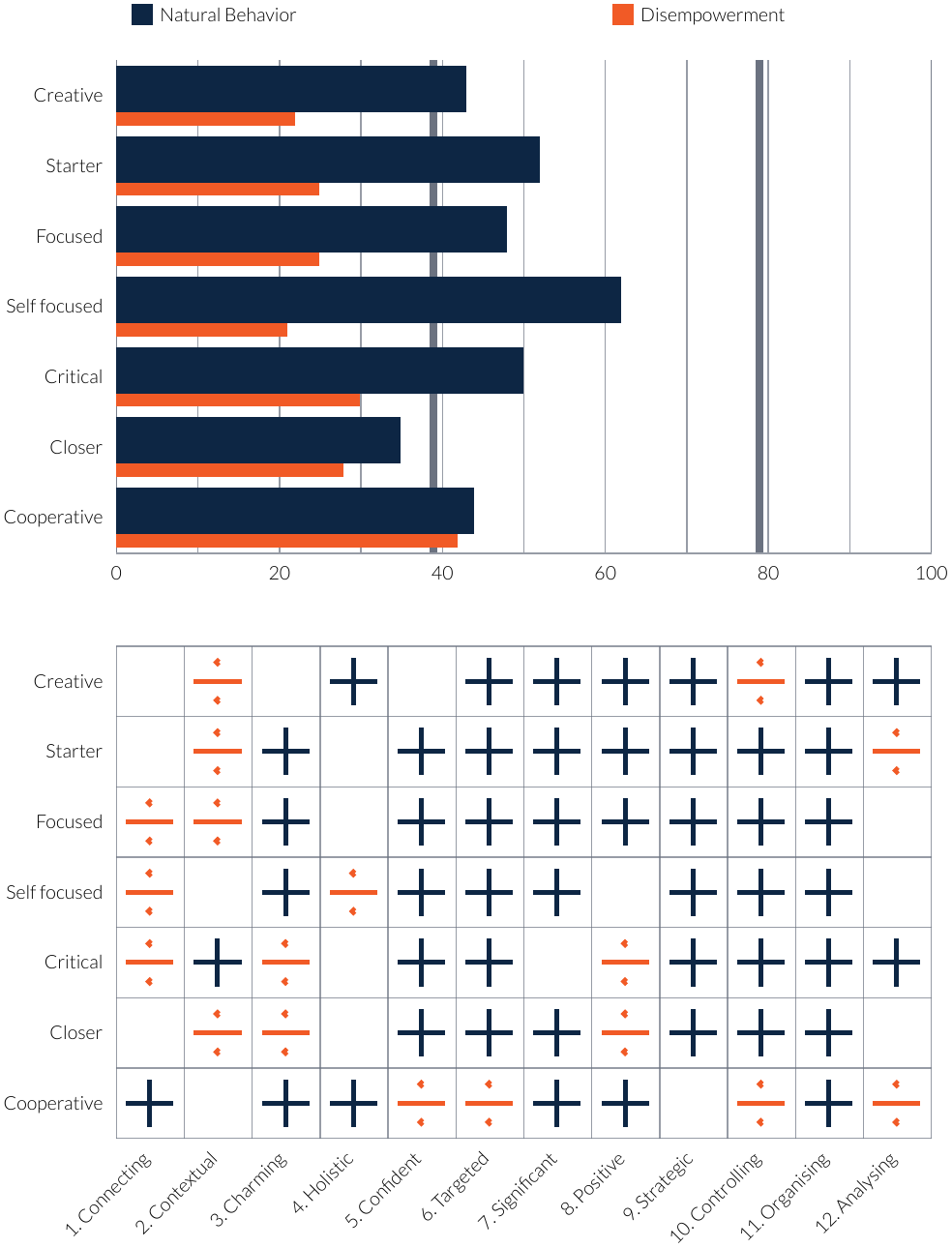
Seven natural work modes: creative, starter, focused, self-focused, critical, closer and cooperative.
Few people are good at both starting and finishing. Knowing who starts and who closes lets you combine people so projects actually land.
“The candidate's strongest work mode is self-focused — she is oriented toward her own goals, her own development, and what she personally achieves through the work in front of her. This sits alongside a solid starter mode and a critical mode that means she is not just an enthusiastic launcher but someone who can also test whether a direction is sound. The closer mode is weak, which is the clearest practical implication: she is a strong beginner and a reasonable mid-game player, but the last ten percent — the documentation, the follow-through, the administrative close-out — requires either a deliberate effort from her or a partner who handles it.”

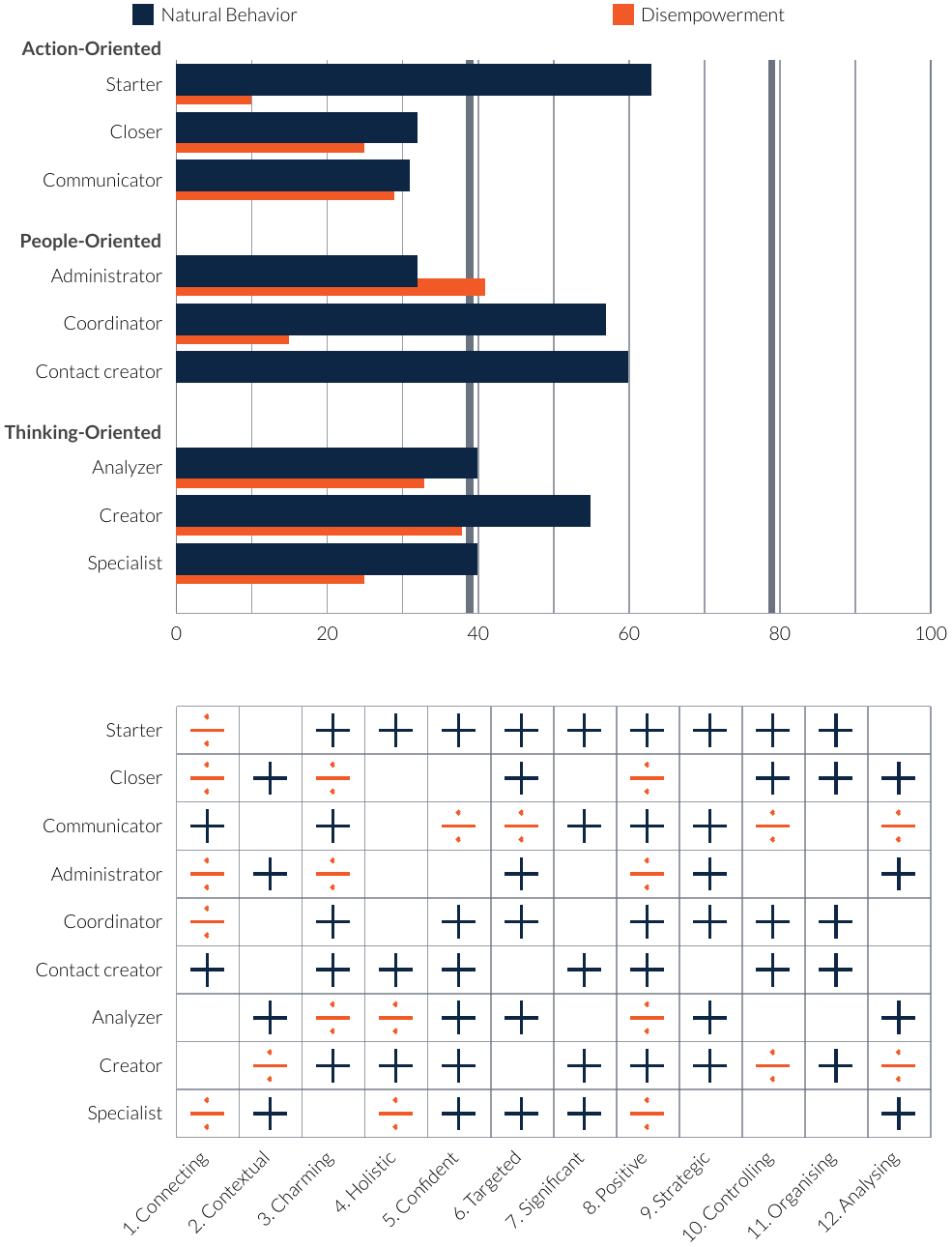
The team roles the person naturally takes, grouped as action-oriented, people-oriented and thinking-oriented.
High-performing teams cover all the roles. Seeing each person’s role shows the gaps before they turn into missed deadlines or friction.
“In a team, the candidate is most naturally a starter, a contact creator, and a coordinator. She gets projects moving, she builds the relationships that hold a group together, and she has enough strategic and organisational range to keep an overview of where things are heading. What she does not cover is the closer and administrator territory — she will not be the person who polishes the deliverable, enforces the process, or makes sure the detail is right.”

How the person works with knowledge: exploring the uncertain and new, using implicit know-how, or documenting and implementing explicit knowledge.
Innovation needs explorers; scaling needs documenters. Putting people in the right part of that process makes knowledge flow instead of getting stuck.
“The candidate is a natural convincer and catalyst in knowledge conversations. She gets into a room, pushes the process forward, challenges what is on the table, and persuades people of a direction — often before the full analysis is in. This is a powerful combination in fast-moving environments where buy-in and momentum matter more than exhaustive validation.”

Practical answers to what managers ask most: how the person communicates, gives and receives feedback, works in a team, leads others and wants to be led.
It turns the profile into everyday actions, so you can prepare one-to-ones, feedback and onboarding without reading the whole report.
“She gives feedback the same way she communicates everything else: directly and with an underlying goal in mind. The warmth is real, but the feedback is not softened to the point of ambiguity. (How does the candidate give and receive feedback?)”
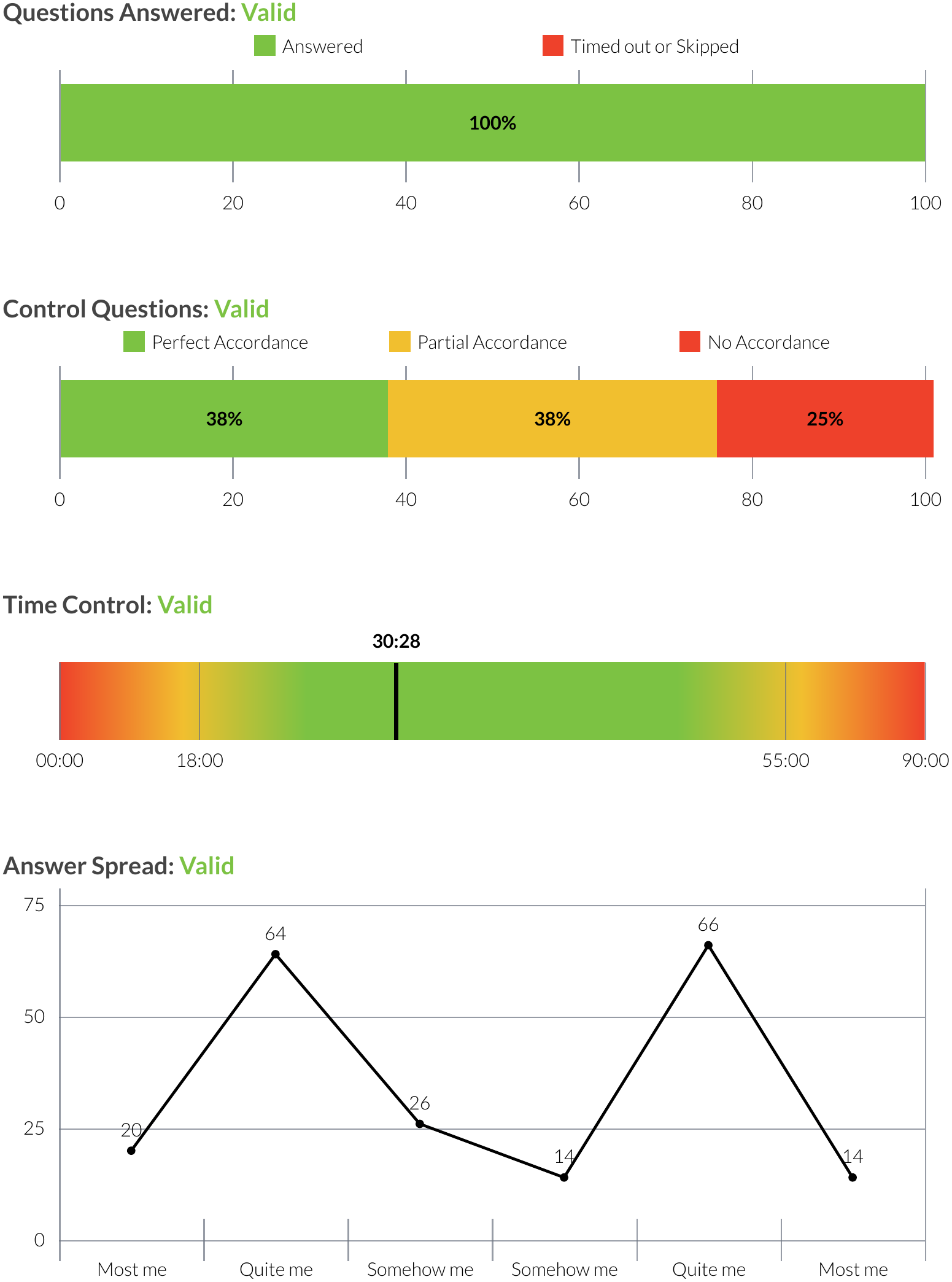
Four quality checks on the answers: questions answered, consistency on control questions, time spent and how answers are spread across the scale.
A report is only as good as the answers behind it. The checks tell you whether you can trust the result, or should follow up with the person.
“In the example all four checks are valid: every question was answered, answers to control questions were consistent, the test took 30 minutes against an expected 18 to 55, and answers were spread across the whole scale.”

Simple questions, no right or wrong answers, and feedback on their own profile.
Sign up, take the test and get your own profile.
You talk to Marie or Jonas. We will together discover if FirstMind can add value to you.