
TRUSTED BY ORGANISATIONS WORLDWIDE




























The strongest single predictor of job performance
Built on leading research
General cognitive ability is the best-documented predictors of job performance.
- Validated against the gold standard
- Calibrated with a 2PL IRT model
- Norm group of working professionals
Fair and precise
Every question is calibrated, so scores mean the same for every person.
- Scores on one shared scale
- No prior knowledge needed
- Compared to norm group
Made to act on
Every result comes with plain-language guidance a hiring team can use.
- Overall score and detailed results
- Explanation attached to results
- Guidance on using the score in hiring
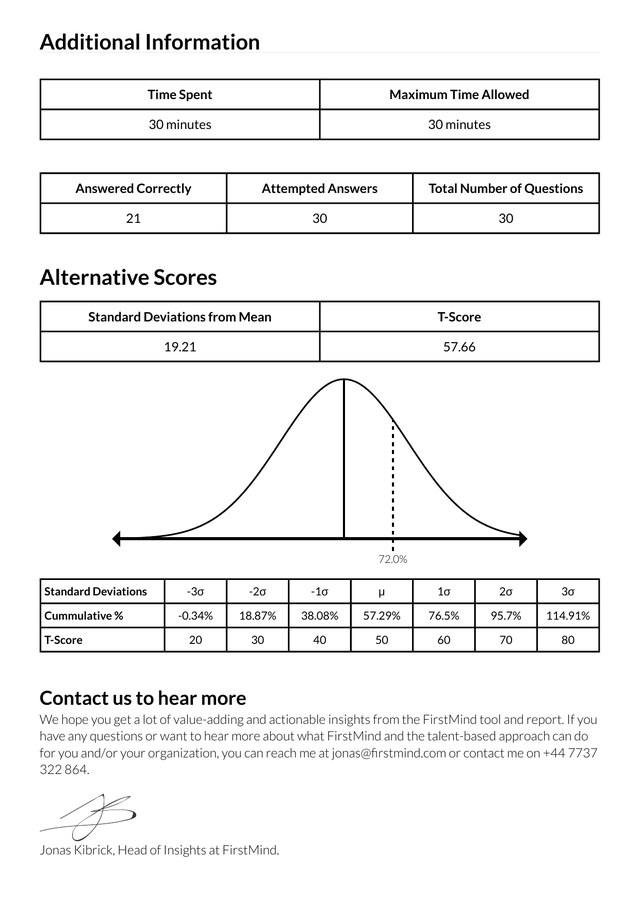
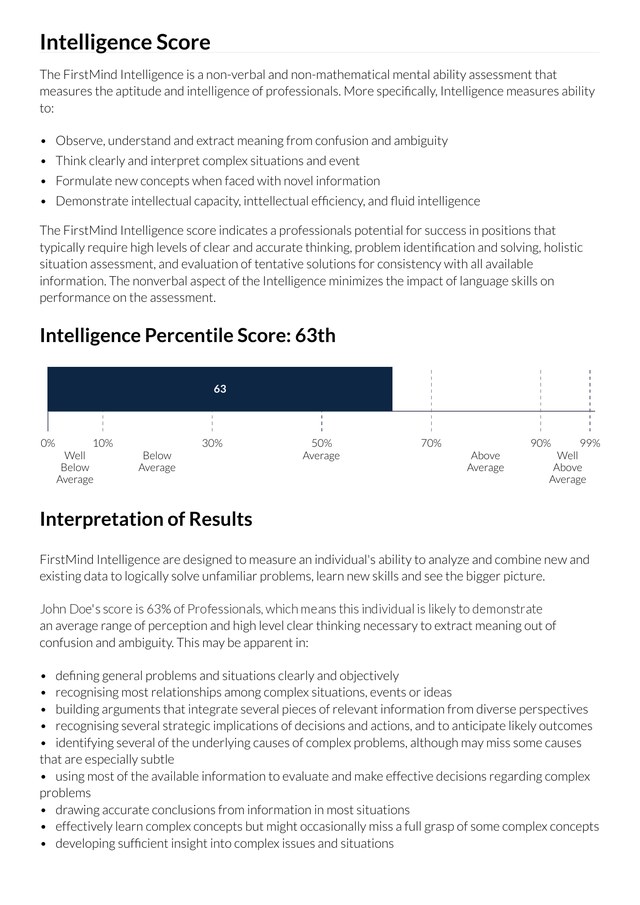
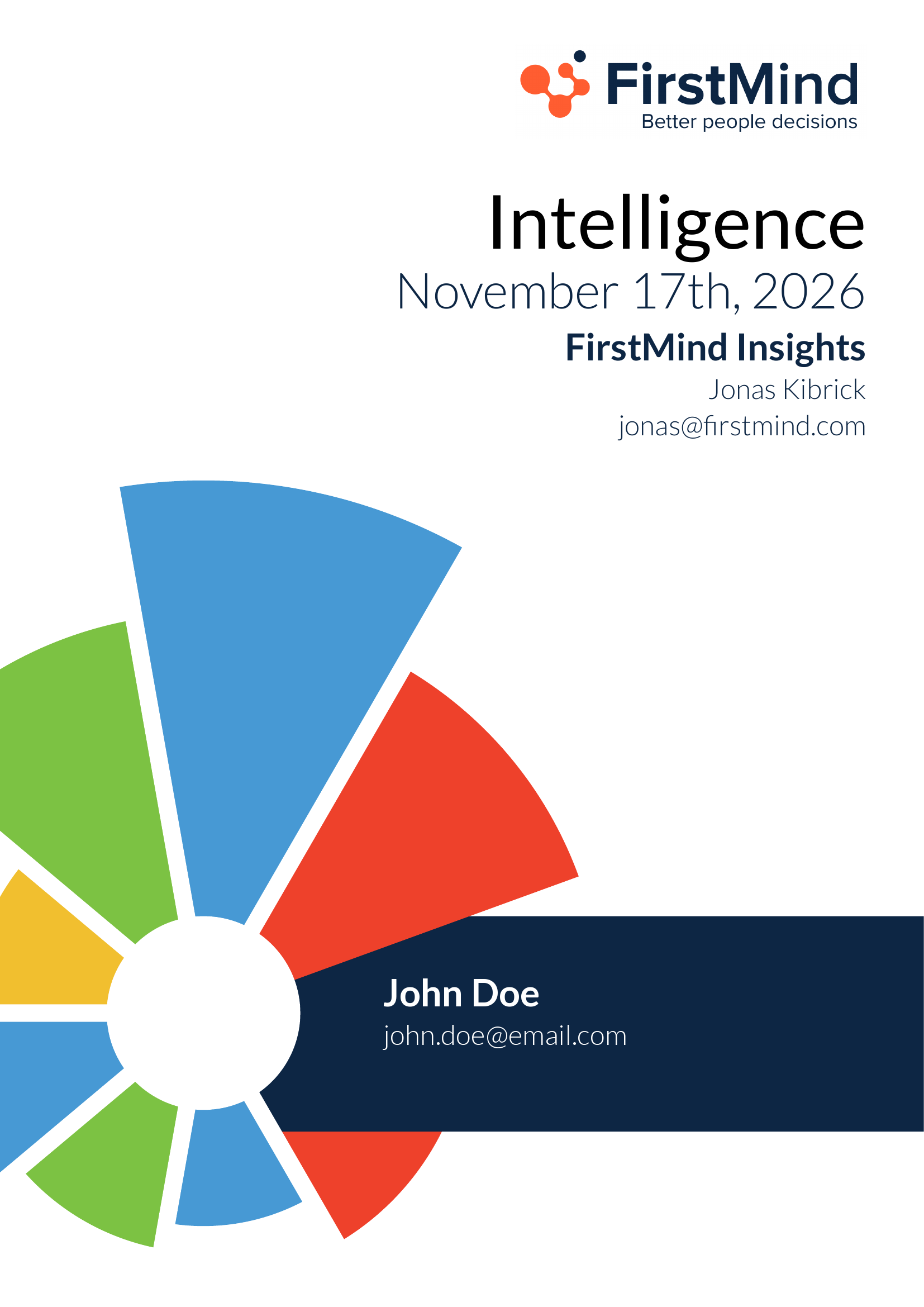
Every part of the report, explained with a real example
Pick any part of the report below and see what it shows, and how to read it.
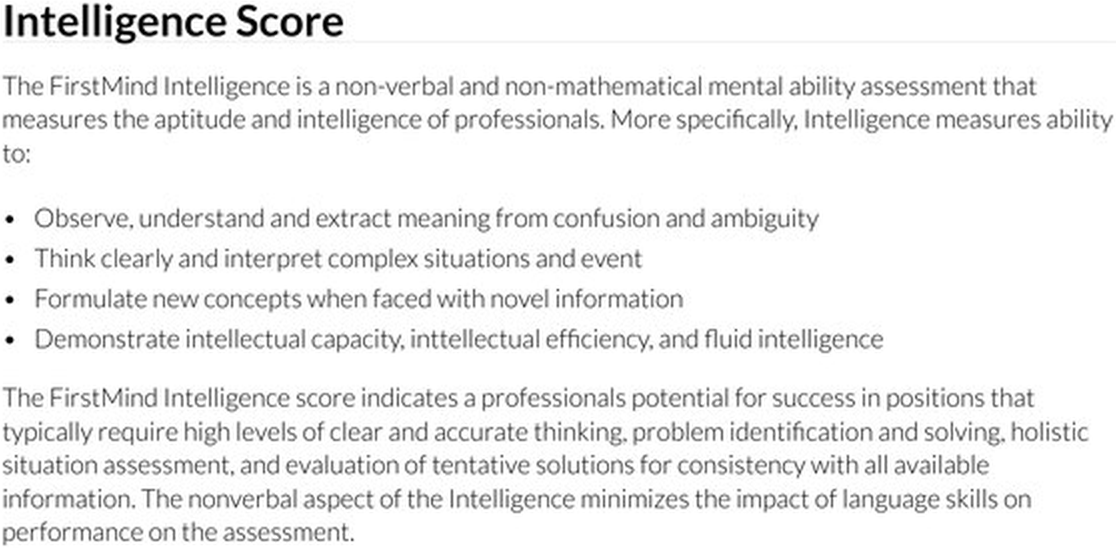
A short description of the test and the four abilities it measures: making sense of ambiguity, thinking clearly through complex situations, forming new concepts and intellectual efficiency.
It explains why the score is fair to compare: there are no words or school maths in the test, so language skills and background don’t skew the result.
“The nonverbal aspect of the Intelligence minimizes the impact of language skills on performance on the assessment.”
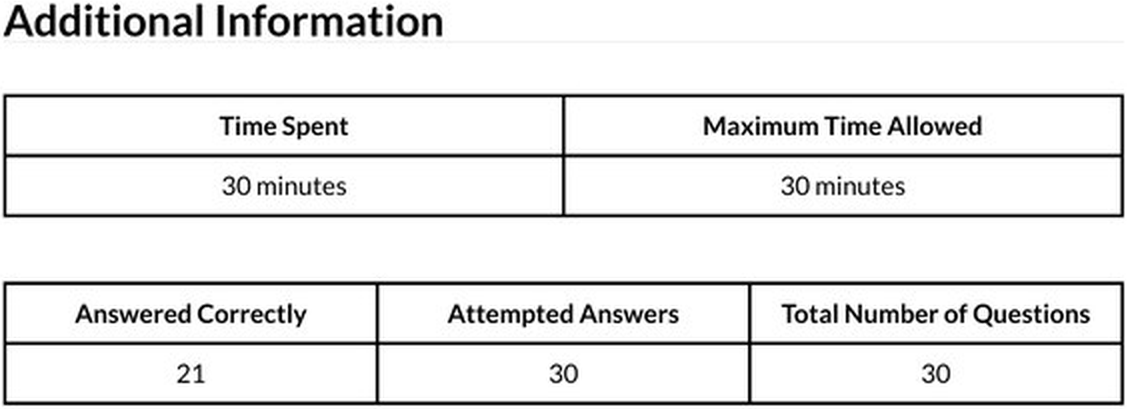
The science in numbers
- 30Minutes
- 30Calibrated questions
- 20K+People tested
- 1Clear score
One score, used across the whole people journey



A test candidates enjoy
Puzzles and problems, no prior knowledge needed, and easy-to-understand results.
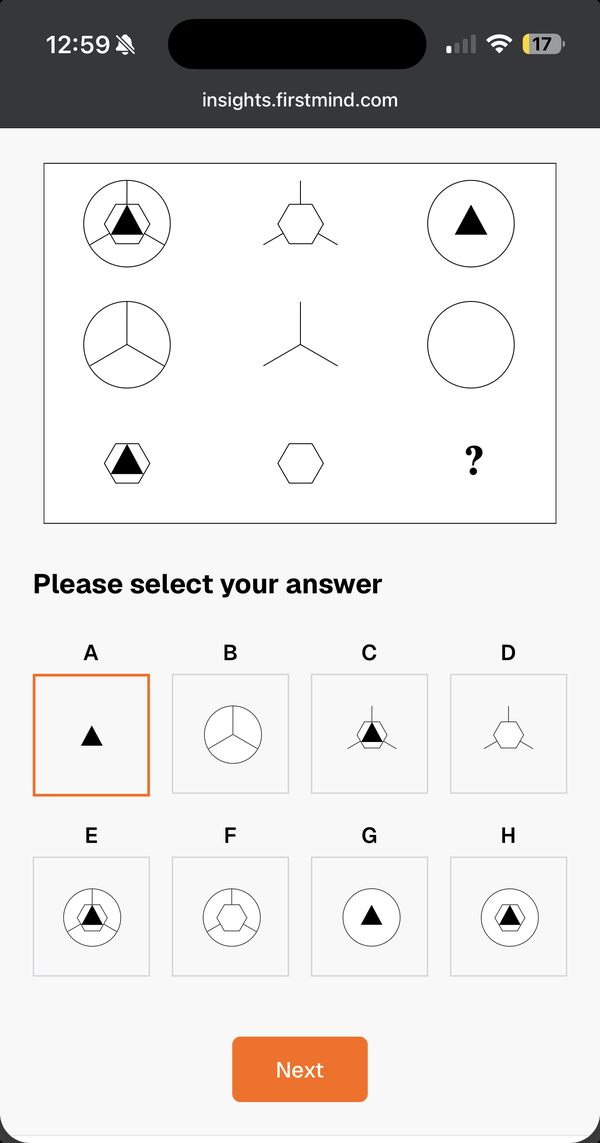
Take the Intelligence test free and see your own score
Sign up, take the test and get your own report.
30 minutes. Real insights. Real Impact.
You talk to Marie or Jonas. We will together discover if FirstMind can add value to you.
- We explore your use casesFrom hiring to building teams and developing people, we map where FirstMind can add the most value for you. 5 minutes.
- We walk through a real reportA full FirstMind report, page by page, on a real person. 15 minutes.
- We tell you honestly if it fitsIncluding “not yet”, if that is the real answer. 10 minutes.